

Best Tactical Pouches for Positive Retention (2026 Guide)
7th Sep 2026
Table of Contents
- Why Positive Retention Matters for Magazine Pouches
- Getting your setup right.
- How to Adjust Magazine Pouch Retention for a Secure Fit
- Retention Failure Analysis: Why Pouches Fail Under Stress
- The Retention vs. Speed Trade-off Matrix
- Top Picks for Tactical Pouches for Positive Retention
- Conclusion: Build a Mission-Ready Gear Setup
- Frequently Asked Questions
Last Updated: September 5, 2026
Why Positive Retention Matters for Magazine Pouches
A magazine pouch that fails at the wrong moment can cost you the fight. Positive retention is the mechanical ability of a pouch to hold a magazine securely under dynamic movement, sprinting, climbing, transitioning through cover, while still allowing a clean draw on demand. At SENTRY Products Group, we define positive retention as the balance between a secure friction fit and deliberate release, not just a tight squeeze that fights your reload.
Most shooters discover this distinction the hard way: after a low crawl or vehicle exit, they pat their rig and find a gap where a spare mag used to sit. The US Army's operational guidance on equipment loadouts emphasizes that mission-critical gear must remain indexed and accessible under physical stress. The real problem is that many pouches prioritize one extreme, holding the magazine so loosely it shifts, or so tightly that reload speed drops to a fumble.
Below, we show you exactly how to evaluate retention systems, what causes failures, and which configurations deliver a mission-ready gear setup.
Getting your setup right.
There is a balance between too much and too little retention of critical items like magazines. As SENTRY we understand this balance and design our products to have both a passive and active retention. The passive retention has to do with design of the pouch to ensure that product sit correctly. This passive retention allows for accerrories to be drawn effectively and remounted without the pouch losing shape and eliminating the ability to quickly re-index into the pouch. The active rentention is in the form of either a bungee retention with high grip tab that allows for rapid removal, or accessory flap with hook and loop closure.
Im both retention types the mechanical advantage is that tension is applied perpendicular to the draw axis, so the magazine cannot bounce upward during hard movement, but the cord releases instantly when you pull forward and up. Installation is straightforward: route the cord through the webbing channels, pass it over the magazine, and cinch the cord lock to your preferred tension.
For those running plate carriers with MOLLE mounting, these pouches are modular and snap-less, attaching via standard molle channels. If you are belt mounting or mounting to a sling or pack strap most SENTRY pouches have a belt slide built into the platform. This accessory is called the variable mounting platform and is found on all pouch sets. This compatibility makes them a cost-effective upgrade for existing pouches, allowing you to tailor retention and mounting preference per pouch based on your environment.
Field Repair and Maintenance: The Gap Most Guides Miss
Shock cord is a consumable item with a finite service life. Under constant UV exposure and tension, the elastic core of a typical 3mm or 4mm bungee cord loses its snap within 12 to 18 months of heavy use. Dry rot appears first as fine surface cracks, then progresses to a chalky texture, and finally the cord snaps at the worst possible moment, usually during a low crawl or vehicle extraction.
A simple field test takes five seconds: pull the cord away from the pouch body. If it does not return with a firm snap, or if you see fraying at the cord lock or webbing channel exit points, replace it immediately.
Replacement is a two-minute job if you have the right supplies. Keep a 6-foot length of 3mm shock cord, a pack of 1/8-inch cord locks, and a lighter in your gear bag. To replace:
- Remove the old cord by pulling it free from the webbing channels.
- Cut a new length approximately 1.5 times the original, accounting for the routing path and the knot at the cord lock.
- Melt both cut ends with a lighter for 2 seconds each to create a clean tip that will not fray when threaded.
- Route the cord through the same webbing channels, pass it over the magazine, and tie a square knot or cinch the cord lock.
- Test the tension with a fully loaded magazine: it should hold under a firm shake but release with a single, deliberate tug.
For shooters who run multiple pouch types, standardizing on a single shock cord diameter simplifies your spare parts kit. Most bungee retention systems use either 3mm or 4mm cord. Check your pouch manufacturer's specification before buying replacements, a thicker cord can deform webbing channels over time, while a thinner cord will not provide adequate retention.
Finally, inspect the webbing channels themselves. Cordura nylon holds up well, but constant friction can wear through the stitching at the channel openings. If you see loose threads or elongation of the channel holes, reinforce them with a few passes of nylon thread or consider upgrading to a pouch with reinforced channel construction.
How to Adjust Magazine Pouch Retention for a Secure Fit
Adjusting magazine pouch retention is a two-minute process that many shooters skip. Start by seating a fully loaded magazine into the pouch.
For bungee systems, the adjustment is the cord lock. Pull the cord tail to increase tension, or press the lock and feed slack to decrease it. The ideal setting allows the magazine to sit flush with the pouch top, with no vertical play when you jump in place. Here is a quick checklist:
- Seat the magazine fully and listen for the Kydex click or visual flush fit.
- Shake the rig vigorously in all axes to test for movement.
- Draw the magazine ten times to confirm the release is smooth.
- Re-test after 30 minutes of wear, as gear settles and loosens.
The goal is a friction fit that is secure but not obstructive. If you are using a polymer magazine with textured gripping surfaces, you may need slightly less tension than with a smooth steel mag, as the texture adds its own grip against the pouch walls.
Retention Failure Analysis: Why Pouches Fail Under Stress
Retention failures rarely happen at the range standing still. They happen during dynamic movement: jumping over obstacles, breaching doors, or transitioning from a primary to a secondary weapon. The most common failure mode is vertical bounce, where the magazine walks upward out of the pouch during repeated impact, eventually clearing the retention device entirely.
A second failure mode is lateral shift. This occurs when a pouch is too wide for the magazine, allowing it to tilt and catch on gear or vehicle seatbelts. This is prevalent in universal pouches designed to hold both single stack and double stack magazines; the compromise in width creates slack for thinner mags. The Federal Law Enforcement Training Centers equipment standards highlight that gear must withstand rigorous physical testing, including running and climbing, without compromising equipment security.
The Retention vs. Speed Trade-off Matrix
You cannot maximize both retention security and draw speed simultaneously; every gear setup involves a trade-off. A passive open-top pouch offers the fastest draw but zero retention under inversion. A full flap pouch with a snap offers maximum security but requires a deliberate two-step opening process.
The sweet spot for most tactical applications is a mid-point: an open-top pouch with a bungee or Kydex retention device that requires minimal force to defeat. For competition shooters, speed dominates, so a light-tension Kydex insert is ideal. For military or law enforcement operators who may need to climb ladders or run through brush, a slightly higher tension setting is justified.
Top Picks for Tactical Pouches for Positive Retention
When selecting tactical pouches for positive retention, the market offers several distinct solutions. Our top editorial pick for most users is the SENTRY Tactical line of MOLLE-compatible pouches, which integrate durable Cordura construction with adjustable retention mechanisms suitable for duty and outdoor use. These pouches provide a secure fit for both polymer and metal magazines while maintaining a low profile on the vest.
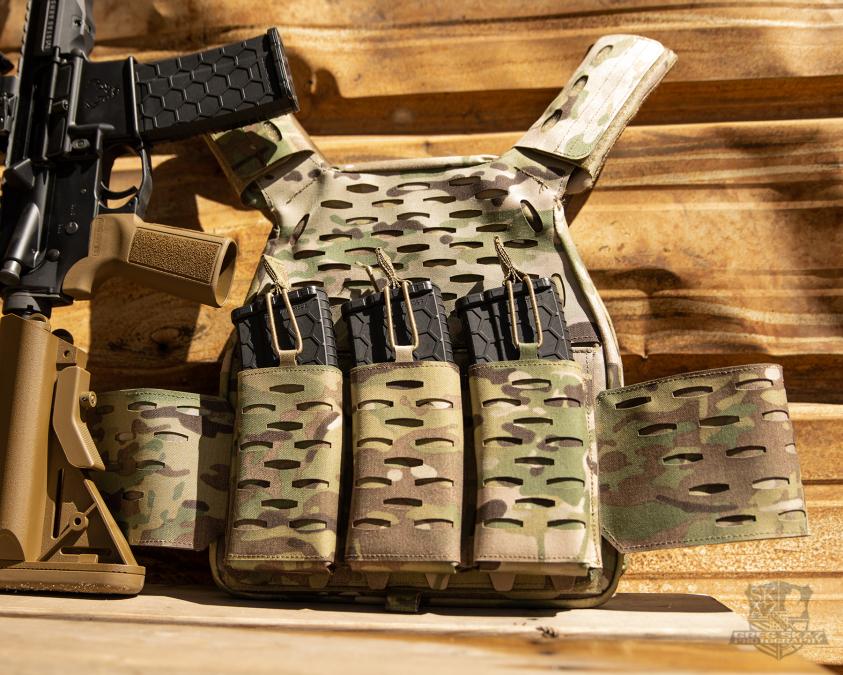
For those prioritizing speed, a Kydex insert pouch is the superior choice. The rigid shell provides an audible click on insertion, confirming a secure fit without looking down. For shooters running a combat loadout with multiple mag types, a hybrid system that combines a rigid backplate with an elastic cord front offers the best of both worlds, though it is typically the most expensive option.
The key is to avoid universal pouches with loose tolerances. They may claim to fit everything, but they secure nothing well. Invest in a pouch designed for your specific magazine dimensions, or one with strong adjustability. SENTRY Tactical's range offers this specificity, ensuring your reload speed and indexing remain consistent under pressure.
Conclusion: Build a Mission-Ready Gear Setup
Building a mission-ready gear setup requires an honest assessment of your movement profile and reload mechanics. The right tactical pouches for positive retention will disappear into your loadout, holding your magazines securely until you need them, then releasing cleanly on demand. Do not wait for a failure during a critical moment to discover your gear is inadequate.
At SENTRY Tactical, we engineer our pouches and tactical gear with durable construction for reliable performance in field environments, ensuring enhanced organization and accessibility. Whether you are a weekend competitor or a security professional, the ability to trust your retention system is non-negotiable. Review your current setup, test it under movement, and upgrade any pouch that fails to deliver a secure fit.
Frequently Asked Questions
What does positive retention mean for tactical pouches?
Positive retention means a magazine pouch holds a magazine securely in place using a mechanical mechanism, such as a friction fit from a kydex insert or tension from a bungee cord, rather than relying on gravity or a loose flap. This prevents magazines from shifting, rattling, or falling out during running, climbing, or other high-intensity movement, while still allowing a deliberate and consistent draw when you need a reload.
How do bungee retention systems compare to kydex inserts?
Bungee retention systems use shock cord tension to hold the magazine top. They are adjustable and work with various magazine widths, but the cord can add friction during the draw. Kydex inserts provide a rigid, friction-fit channel that clicks around the magazine for a consistent, secure hold. Kydex generally offers a faster, more reliable draw with an audible click, while bungee systems are often easier to retrofit onto existing gear.
Can you add positive retention to existing tactical pouches?
Yes, you can often add positive retention to existing pouches. A bungee retention kit for magazine pouches is the most common solution, as it can be threaded through existing webbing or grommets on many open-top designs. For a more rigid solution, some pouches accept aftermarket kydex inserts that replace the internal fabric sleeve. Before buying, verify your pouch's internal dimensions and attachment points to ensure the kit or insert is compatible.
Are open-top pouches with positive retention secure enough for high-intensity movement?
Yes. An open-top pouch with a well-fitted kydex insert or properly adjusted bungee retention is secure enough for high-intensity movement, including running, jumping, and tactical training. The retention mechanism holds the magazine in place, not the pouch's height. The key is proper adjustment and periodic checks. A pouch that is too loose will allow movement, while one that is too tight can slow your reload speed.