

Tactical Belts for Daily Use: A 2026 Guide
30th Aug 2026
Table of Contents
- What Makes a Tactical Belt Suitable for Everyday Carry
- Best Tactical Belts for Concealed Carry
- How to Choose a Concealed Carry Belt
- Ratcheting Gun Belt vs. Traditional Buckle Systems
- Long-Term Wear and Tear Analysis
- Tactical Belts for Daily Use: Key Takeaways
Last Updated: August 27, 2026
What Makes a Tactical Belt Suitable for Everyday Carry
A tactical belt for daily use is fundamentally different from a standard dress belt. The distinction lies in load-bearing capacity, material durability, and the ability to support firearm weight without sagging or shifting throughout the day. At SENTRY Products Group, we understand that everyday carry demands a belt that performs under stress while remaining comfortable enough for eight hours of continuous wear.
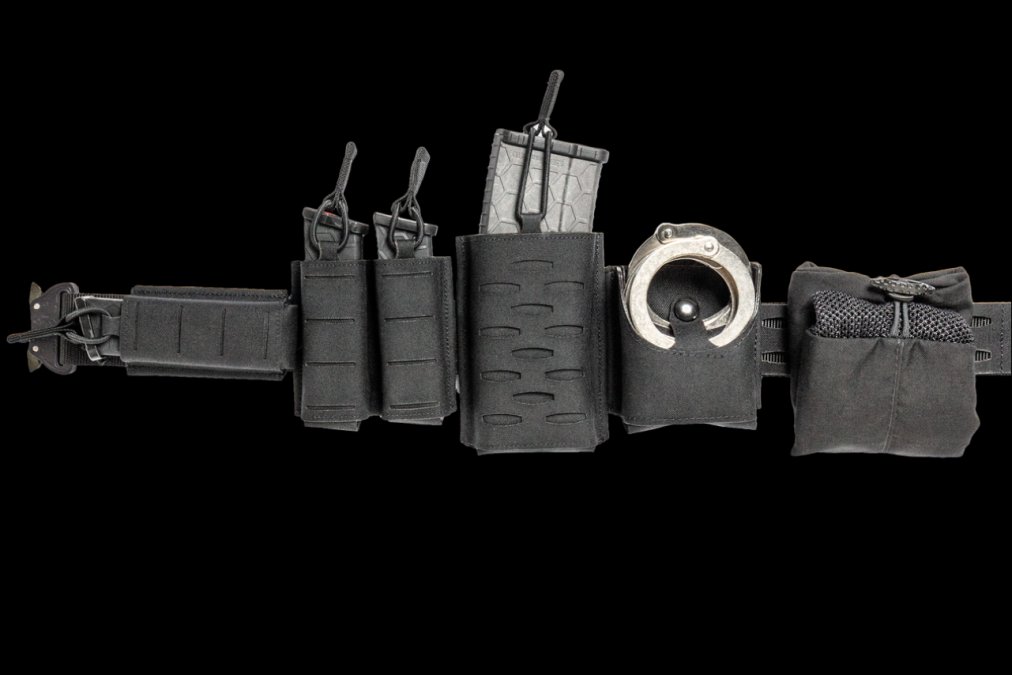
The core function of a tactical belt is to distribute weight evenly across your waistline. A quality tactical belt prevents your firearm, holster, and accessories from pulling down on your pants, which creates both a comfort problem and a concealment problem. When your belt fails, your entire EDC setup becomes unstable.
Load-Bearing Capacity vs. Comfort
Load-bearing capacity refers to how much weight a belt can support without deforming or losing rigidity. Most tactical belts rated for everyday carry handle between 10 and 15 pounds of gear comfortably (peer-reviewed research). This includes a holstered firearm, spare magazines, a knife, and other accessories.
The tension here is real: maximum stiffness doesn't equal maximum comfort. A belt that's too rigid creates pressure points around your waist and becomes fatiguing after a few hours. The best tactical belts balance reinforced core materials with flexibility in the outer layers. Your belt should feel snug but not constricting, and it should maintain its shape without feeling like a steel band around your midsection. On our Low Profile Operators Belt we sew 7 rows of stitching and add a polymer liner sandwiched between the layers of nylon webbling. That combination gives a structure that prevents the belt from rolling or deforming from the heavier objects like a holster platform loaded on the belt.
All-day wear demands that your belt remain comfortable during sitting, bending, and movement. A belt that works great standing at the range might become unbearable in a car or at a desk. Test any belt in real-world positions before committing to it.
Material Durability: Nylon vs. Leather
Nylon tactical belts dominate the concealed carry market for good reason. Nylon offers superior abrasion resistance compared to leather, especially in high-friction environments. Tactical nylon also resists moisture better, making it suitable for outdoor use and varying weather conditions.
Leather belts, by contrast, offer a more refined appearance for civilian wear. They break in over time, which some users prefer, but leather requires more maintenance and can deteriorate faster in wet conditions. A quality leather belt designed for tactical use will have reinforced core materials, often a polymer-reinforced layer sandwiched between leather outer layers, to provide the stiffness needed for load-bearing.
The choice between nylon and leather often comes down to your primary use case. If you're carrying daily in an office environment and want a belt that looks professional, leather works. If you're in field conditions or need maximum durability, nylon is the stronger choice. Many users own both and rotate based on their daily activities.
Best Tactical Belts for Concealed Carry
When selecting a belt specifically for concealed carry, you're looking for three things: stability that prevents holster movement, a low-profile design that doesn't print under clothing, and adjustability that accommodates different carry positions.
Concealed Carry Stability and Stiffness
Stability refers to how well your belt resists movement when your holster shifts due to sitting, bending, or running. A belt with insufficient stiffness will allow your holster to rotate or slide, which degrades your draw and compromises concealment.
The best concealed carry belts feature a double-ply or reinforced core construction. This means the belt has a rigid internal layer, typically polymer-reinforced material or stacked nylon, that provides structural integrity without adding excessive bulk like you find in SENTRY’s series of belts. The outer layer remains comfortable against your skin while the core does the work.
When you test a belt, wear it with your normal EDC loadout for at least two hours. Pay attention to whether your holster position remains consistent or drifts throughout the day. A quality belt should keep your holster in the same position from morning to evening.
Low-Profile Design for Civilian Wear
Low-profile design means the belt doesn't advertise its tactical purpose. It should look like a normal belt to casual observers while providing full tactical functionality underneath. This distinction matters if you carry in professional environments or public spaces where a visibly tactical appearance might draw unwanted attention.
The best low-profile belts use subtle design cues: minimal branding, standard width (usually 1.5 inches), and color options that match everyday wear. A black or tan tactical belt blends into casual or business-casual clothing far better than one with prominent logos or aggressive styling.
Width matters here. A 1.5-inch belt is the standard for concealed carry because it distributes weight effectively without creating a visible ridge under your shirt. Wider belts (1.75 inches or more) can print noticeably, especially under fitted clothing.
How to Choose a Concealed Carry Belt
The selection process involves matching belt specifications to your body type, carry method, and daily environment. A belt that works perfectly for appendix carry might be uncomfortable for strong-side carry. Your body type also influences which belt width and stiffness level works best.
Belt Width Standards and Adjustability
The industry standard for tactical belts is 1.5 inches wide (nssf.org). This width accommodates most holster designs and distributes weight across a larger area of your waistline, reducing pressure points. Wider belts exist, but they're less common for everyday carry because they're more visible under clothing.
Adjustability is critical. Your belt must accommodate your waistline across different clothing layers and body conditions. A belt with micro-adjustability, the ability to adjust in small increments, outperforms traditional buckle systems that only offer adjustment in one-inch increments.
Most quality tactical belts adjust either through a ratcheting mechanism or traditional buckle system. Ratcheting systems offer finer adjustment but require more hand strength to tighten. Traditional buckles adjust quickly but with less precision. Your choice depends on how often you adjust your belt during the day and your physical capability to operate the adjustment mechanism.
Belt Loop Compatibility Guide
Belt loops matter more than many users realize. Your belt must fit through the loops on your pants without excessive friction or binding. Standard belt loops accommodate 1.5-inch belts with minimal clearance. If you choose a belt wider than 1.5 inches, verify that your pants have reinforced or oversized belt loops.
Friction is the enemy of all-day wear. When your belt catches on belt loops, it creates drag that becomes fatiguing and can shift your holster position. High-quality tactical pants include reinforced belt loops designed to accommodate tactical belts without friction.
If you're carrying with standard jeans or casual pants, measure your existing belt loops before upgrading. A belt that's even slightly too wide will create noticeable friction and may eventually tear your belt loops. This is especially true if you're adjusting your belt frequently throughout the day.
Body Type Considerations
Your body type influences which belt specifications work best. Larger individuals benefit from belts with maximum stiffness because they're supporting more weight. Smaller or slimmer individuals might find maximum-stiffness belts uncomfortable because the rigidity creates pressure points. holster concealment tips.
Consider your typical carry position as well. Appendix carry (front waistline) benefits from a stiffer belt because the holster creates forward pressure on the belt. Strong-side carry (3 o'clock position) allows for slightly less stiffness because the weight distributes differently. Inside-the-waistband carry requires a belt with excellent retention because the holster relies on belt tension to stay in place.
Your daily clothing also matters. If you wear fitted shirts or form-fitting pants, you need a lower-profile belt that won't create visible ridges. Looser clothing accommodates slightly bulkier belts more easily.
Ratcheting Gun Belt vs. Traditional Buckle Systems
The buckle system you choose affects both daily usability and long-term durability. This decision splits the market: ratcheting mechanisms offer precision and speed, while traditional buckles offer simplicity and reliability.
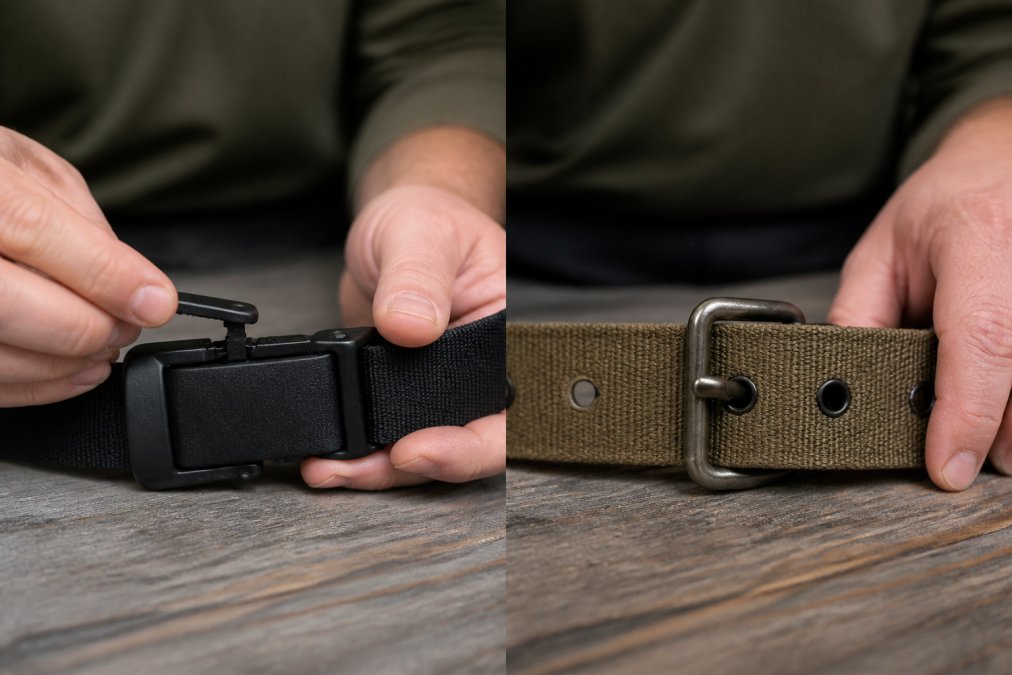
Micro-Adjustability and Fit Precision
Ratcheting mechanisms allow adjustment in small increments, often quarter-inch or smaller, without removing the belt. This precision is valuable if your waistline changes throughout the day due to sitting, standing, or different clothing layers.
Traditional buckles adjust in one-inch increments, which works fine for most users but can feel imprecise. If you're between sizes, a traditional buckle might force you into a choice between slightly too loose or slightly too tight.
The advantage of ratcheting systems extends to appendix carry, where small adjustments in belt tension significantly affect holster angle and comfort. A quarter-inch adjustment can mean the difference between a comfortable carry and an uncomfortable one.
However, ratcheting mechanisms add complexity. More moving parts mean more potential failure points. A quality ratcheting belt from a reputable manufacturer will outlast a poorly-made one, but a well-made traditional buckle is inherently simpler and therefore more durable.
Quick-Release Buckles and Tactical Features
Quick-release buckles allow you to remove your belt without unbuckling it, useful in tactical scenarios but less critical for everyday carry. Most civilian users never need this feature, but it's available if your use case demands it.
Tactical features like reinforced stress points and modular attachment systems add weight and bulk. For everyday carry, these features often represent unnecessary complexity. A simple, durable belt with a solid buckle system performs better for daily use than one loaded with features you'll never use.
The best tactical belt for daily wear prioritizes simplicity and durability over feature count. A belt that works reliably for five years beats one loaded with features that might fail after two years.
Long-Term Wear and Tear Analysis
A tactical belt is an investment that should last years with proper care. Understanding how belts degrade helps you choose one that will maintain performance over time.
Abrasion Resistance and Tensile Strength
Tensile strength refers to how much force a belt can withstand before tearing or deforming permanently. A quality tactical belt should maintain its shape and rigidity after years of daily use. Nylon materials generally offer superior tensile strength compared to leather, especially when the nylon is polymer-reinforced.
Abrasion resistance determines how well the belt resists damage from friction, rough surfaces, and repeated movement. Tactical nylon with high abrasion resistance maintains its appearance and function even after extended field use. Leather, by contrast, shows wear more visibly but often develops character that users appreciate.
The reinforced core of a quality belt, whether nylon or leather, should never permanently deform. If you remove a quality belt and it retains wrinkles or creases, the core material has failed. Test this by wrapping the belt around your hand and releasing it; it should return to its original shape immediately.
Environmental Suitability for Field Use
If you use your belt in outdoor or field environments, weather resistance matters. Tactical nylon resists moisture and dries quickly, making it suitable for wet conditions. Leather requires treatment to resist moisture and can deteriorate if exposed to prolonged wetness.
Temperature extremes also affect belt performance. Nylon maintains its properties across temperature ranges better than leather, which can become brittle in cold or stiff in heat. For users who carry year-round in varying climates, nylon offers more consistent performance.
UV exposure is another consideration. Both nylon and leather can fade with sun exposure, but nylon typically resists UV damage better than untreated leather. If you spend significant time outdoors, choose a belt with UV-resistant materials.
Tactical Belts for Daily Use: Key Takeaways
Your choice of belt fundamentally affects your entire EDC experience. The right belt keeps your firearm stable, comfortable, and concealed throughout the day. The wrong belt creates constant frustration and compromises safety.
SENTRY Tactical recognizes that everyday carry demands a belt engineered for real-world use, not just tactical aesthetics. The best belt balances load-bearing capacity with comfort, offers micro-adjustability for precision fit, and maintains its integrity through years of daily use.
When evaluating tactical belts, prioritize stiffness and stability over feature count. Test the belt under realistic conditions before committing. A simple, durable belt that performs reliably beats a complex one loaded with features you'll never use.
Feature | Ratcheting System | Traditional Buckle |
|---|---|---|
Adjustment Precision | Quarter-inch increments | One-inch increments |
Ease of Use | Requires hand strength | Quick and simple |
Complexity | More moving parts | Minimal components |
Durability | Depends on quality | Inherently simpler |
Best For | Appendix carry, frequent adjustment | Everyday carry, simplicity |
This article was written using GrandRanker