

How to Protect Rifle Scopes: Field & Storage
22nd Sep 2026
Table of Contents
- Why Protecting Your Rifle Scope Matters
- Types of Scope Protection Accessories
- Best Rifle Scope Covers for Field Conditions
- Scope Sunshade Benefits and Installation
- How to Clean Rifle Scope Lenses Without Damage
- Storage and Long-Term Protection
- Common Protection Mistakes to Avoid
- Conclusion
- Frequently Asked Questions
Last Updated: September 20, 2026
Why Protecting Your Rifle Scope Matters
Your rifle scope is a significant investment, yet many shooters neglect to protect rifle scopes with basic protection. Dust, moisture, impacts, and scratches degrade glass clarity and damage internal components. The good news: protecting rifle scopes doesn't require expensive equipment or complicated procedures.
Simple protection methods prevent costly repairs and extend optic life. A single drop can misalign internal lenses; moisture can cause fungus growth on glass surfaces. Understanding the threats your scope faces helps you select the right protection strategy.
Types of Scope Protection Accessories
Scope protection comes in several forms, each designed for specific use cases. Understanding the differences helps you choose the right solution for your needs.
Flip-Up Caps and Hard Shell Covers
Flip-up caps attach to the objective and ocular lenses, flipping open for shooting and closed for protection. These provide a quick access lightweight design.
Hard shell covers offer stronger impact resistance but take longer to remove and add bulk. They work best for storage and transport rather than field use.
Universal caps fit most scope diameters through adjustable mechanisms; custom-fit caps match your specific model exactly for a more secure fit.
Neoprene Sleeves and Soft Cases
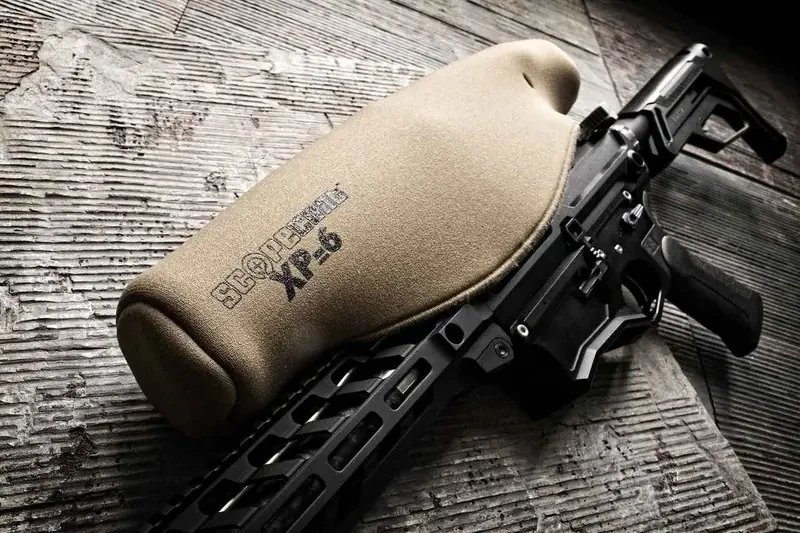
Neoprene sleeves like the Scopecoat product wrap around the scope body, providing padding and moisture protection while remaining lightweight and packable.
Soft cases with foam inserts cushion the scope from all angles, making them ideal for long-term storage or travel, though they're bulky for field use.
Neoprene resists water better than plastic, slowing moisture infiltration during wet conditions while balancing protection, weight, and packability.
Scope Sunshades and Lens Hoods
Scope sunshades extend from the objective lens, reducing glare and improving contrast while providing debris protection.
Lens hoods are shorter and less intrusive, better for shooters prioritizing a clean sight picture. Both attach via threads or friction fit.
Sunshades shield against brush, branches, and accidental contact during carry, though they won't prevent damage from direct drops.
Best Rifle Scope Covers for Field Conditions
Flip-up caps are the standard for active hunting and tactical shooting. Quality flip-ups have positive detents and secure retention mechanisms to prevent loss during movement.
Custom-fit flip-up caps outperform universal models in field conditions, maintaining consistent positioning during movement through brush or rough terrain.
Sunshades complement flip-up caps during extended field sessions, protecting the objective lens and improving optical performance in bright sunlight.
Neoprene sleeves protect rifles stored in packs or vehicles between shooting sessions, guarding against vibration damage and moisture.
Scope Sunshade Benefits and Installation
Sunshades reduce glare and improve contrast in bright conditions, which is why military and law enforcement shooters use them routinely.
Sunshades shield the objective lens from rain, dust, and debris, blocking water runoff during light rain and preventing dust accumulation.
Most sunshades thread onto the objective lens housing; screw hand-tight to avoid damaging threads. Some use friction-fit designs. Check your scope's manual for the correct method.
Remove your sunshade before cleaning the objective lens, then reinstall after cleaning.
How to Clean Rifle Scope Lenses Without Damage
Proper cleaning restores lens clarity without introducing scratches. Modern scope lenses have precision optical coatings far more fragile than bare glass.
Understanding Optical Coatings
Most rifle scope lenses feature multi-coated optics, microscopically thin layers that reduce light reflection, improve contrast, and enhance color transmission. A typical lens has 4-8 coating layers, each only 0.1-0.5 micrometers thick.
These coatings are vulnerable to harsh chemicals, abrasive materials, and improper cleaning. Alcohol, acetone, and ammonia-based cleaners degrade coatings; abrasive cloths scratch both coatings and glass.
Pre-Cleaning Inspection and Dust Removal
Remove loose dust with compressed air before applying liquid. Hold the scope at a 45-degree angle and use short bursts from 6-8 inches away. Never shake or tap the scope, as this drives particles into the lens assembly.
Inspect the lens under bright light for particles. Use compressed air again if visible; wiping over dust acts like sandpaper and creates permanent scratches.
For stubborn dust, use a soft lens brush designed for camera optics. Brush gently from center outward in a spiral pattern; never use circular motions.
Selecting Safe Cleaning Solutions
Use lens cleaning solution specifically formulated for optical coatings. Avoid window cleaners, rubbing alcohol, acetone, and solvents stronger than 70% isopropyl alcohol, these damage coatings.
Check manufacturer specifications or test on an old lens first. When in doubt, use distilled water with a single drop of mild dish soap.
Proper Wiping Technique
Apply cleaning solution to a lint-free microfiber cloth, never directly to the glass. Liquid applied directly can seep into the lens assembly and damage internal coatings.
Wipe gently in circular motions from center outward. Use light pressure; heavy pressure increases friction and scratching risk.
For stubborn smudges, let cleaning solution sit 5-10 seconds before wiping. Use a fresh cloth section for each pass.
Use a dry microfiber cloth to remove remaining moisture and prevent water spots and mineral deposits.
Cleaning the Ocular Lens
The ocular lens directly affects image quality. Clean it using the same method as the objective lens: compressed air first, then gentle wiping with optical cleaner and microfiber cloth.
The ocular lens is exposed to skin oils, eyelashes, and sweat, which are more stubborn than dust and may require longer soaking. Never use excessive pressure.
Internal Lens Cleaning
If you notice dust or debris inside the scope, it requires professional cleaning. Opening the scope yourself risks introducing contamination or misaligning internal optics.
Most optical repair shops can disassemble, clean, and reseal a scope for $75-$150, far cheaper than replacement and safer than attempting it yourself.
Drying and Storage After Cleaning
Allow the scope to air dry completely in a warm, dry location for 30 minutes to 1 hour. Do not use heat sources like hair dryers, which damage coatings.
Once dry, reinstall ventilated caps for storage. If using immediately, wipe the lens one final time with a dry cloth before shooting.
Materials to Avoid
Never use harsh solvents, acetone, abrasive materials, paper towels, or tissues on scope lenses. Do not use inverted compressed air cans or breathe on the lens, saliva and breath etch coatings.
If you accidentally use an inappropriate cleaner, rinse with distilled water and air dry. If you notice cloudiness, discoloration, or reduced light transmission, have the scope evaluated professionally.
Storage and Long-Term Protection
Long-term storage requires different protection than field use. Humidity control and condensation prevention are critical, as they are the leading causes of internal fungus growth and optical degradation.
Climate Control Fundamentals
Store your rifle where relative humidity stays between 30% and 50%. Avoid basements and attics, which experience daily humidity swings of 20-40 percentage points. A climate-controlled closet, gun safe, or interior cabinet maintains stable conditions.
Avoid storing rifles in hot attics or damp basements. A climate-controlled garage or interior storage space is superior.
Temperature stability matters as much as absolute temperature. Aim for locations where temperature variation stays under 15°F between day and night to prevent seal stress and moisture infiltration.
Desiccant and Moisture Control
For scopes stored longer than three months, use desiccant packs inside the storage case or gun safe. Place them alongside the scope, not touching the optic directly.
Replace desiccant packs every 6-12 months. Color-indicating silica gel changes from blue to pink when saturated, signaling replacement.
For gun safes, use larger desiccant containers or electric dehumidifiers designed for safe interiors to maintain 30-50% humidity.
Ventilation and Cap Protocols
Remove lens caps before storing your scope for extended periods, as sealed caps trap moisture and promote fungus growth. Use ventilated caps (1-2 mm holes) instead.
If you must use sealed caps, open them weekly for 15-30 minutes to allow air exchange.
Case Selection and Padding
Neoprene sleeves or soft cases with foam inserts protect scopes during long storage. The padding prevents dust accumulation and protects against accidental bumps. Wrap the entire rifle in a gun sock or protective covering to minimize dust exposure. Hard-shell cases offer superior impact protection but should include ventilation holes or be opened monthly to prevent humidity buildup.
Monitoring and Inspection Protocol
Check stored scopes monthly during extended storage. Open the case, inspect the objective and ocular lenses for condensation or dust accumulation inside the scope. Look for any visible moisture on internal glass surfaces or fogging that appears when you look through the scope.
Separation and Chemical Isolation
Store ammunition separately from firearms and scopes. Keep scopes away from corrosive materials, solvents, gun cleaning supplies, and lubricants. Solvent vapors can damage optical coatings and seals over time. If you store scopes in a gun safe with ammunition, use a separate compartment or sealed container for ammo to prevent vapor exposure.
Common Protection Mistakes to Avoid
Many shooters damage their scopes through well-intentioned but incorrect protection practices.
Conclusion
Protecting your rifle scope is straightforward once you understand the threats and solutions. To protect rifle scopes in the field requires fast, reliable flip-up caps that don't interfere with shooting. Storage protection emphasizes moisture control and dust exclusion through proper cases and climate-managed locations.
Frequently Asked Questions
What are the main benefits of using a scope cover?
Scope covers protect your optics from scratches, dust, moisture, and impact damage that can degrade glass clarity and affect zero. Covers also shield the objective and ocular lenses from rain, snow, and debris during field conditions. A quality cover maintains your riflescope's performance and extends its lifespan, protecting your investment in expensive optics.
Should I use a neoprene cover or hard caps for storage?
For long-term storage, hard shell covers offer superior impact resistance and shock absorption, protecting against accidental drops and pressure. Neoprene covers work well for field use when you need lightweight, quick-access protection. Many shooters use hard cases for home storage and neoprene covers for hunting or range trips. Choose based on your primary use: durability for storage, accessibility for field conditions.
How do I clean my rifle scope lenses without scratching them?
Use a soft brush or air blower first to remove loose dust and debris. Apply lens cleaner designed for optics to a microfiber cloth, never directly to the glass. Wipe gently in circular motions from center outward. Avoid paper towels and compressed air, which can cause scratches. Clean only when necessary to minimize contact with the glass surface.
Why is a sunshade beneficial for rifle scopes?
Scope sunshades reduce lens glare and reflections, improving glass clarity and target visibility in bright conditions. They also protect the objective lens from rain, snow, and direct sunlight that can affect optical performance. Sunshades provide weatherproofing during extended field operations and enhance contrast for better sight picture accuracy.